
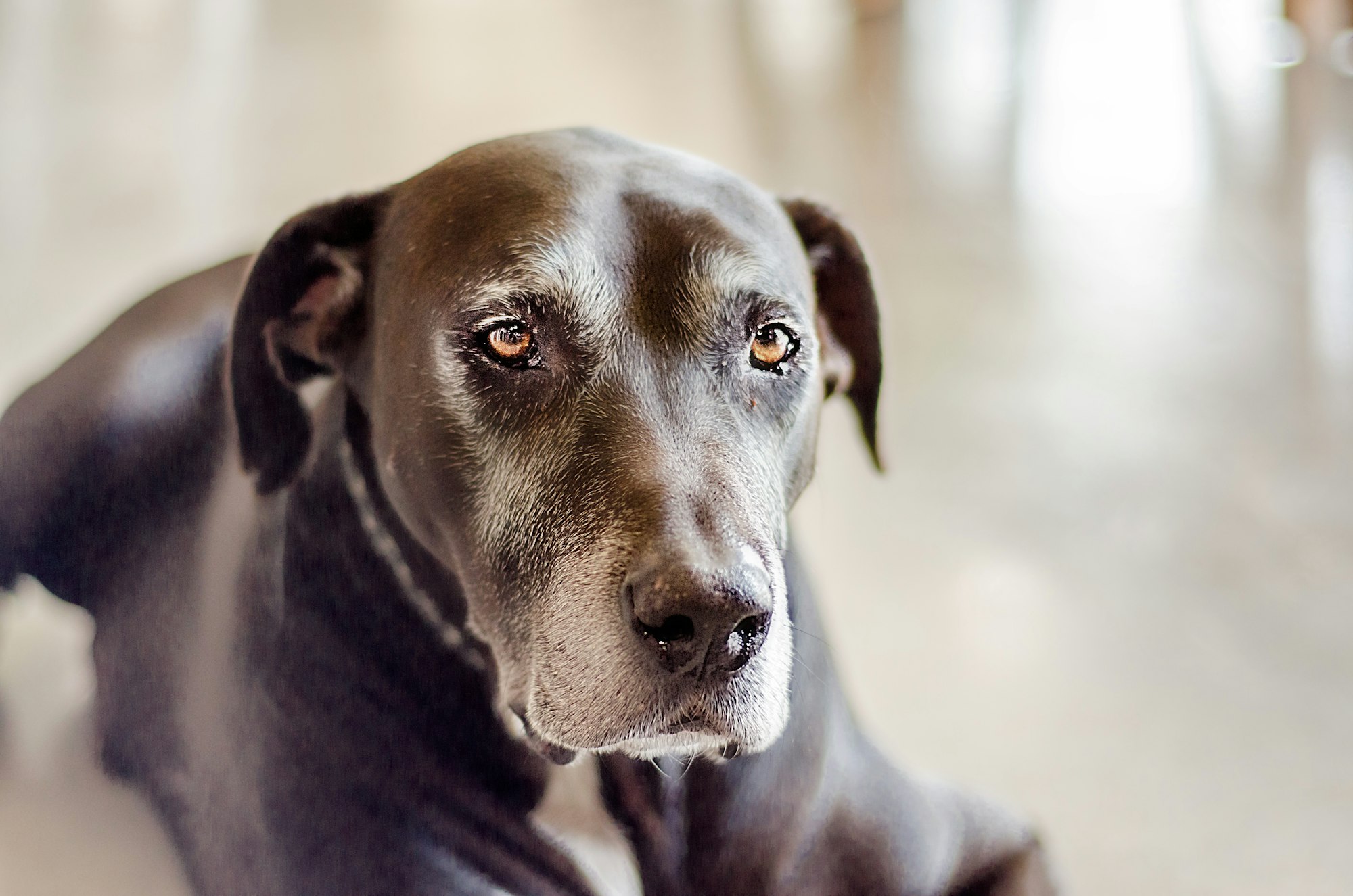
Somewhere between their sixth and twelfth birthdays, depending on size, most dogs get old without anyone marking the day. They sleep longer, take the stairs slower, and look up at you with a steadiness that wasn’t there before. Cats do the same on their own schedule. Most of us only notice in hindsight.
When is a pet considered senior?
The American Animal Hospital Association counts a dog as senior for the last quarter of its expected lifespan, so size matters. A Great Dane can be senior at six, while a Chihuahua may not get there until eleven or twelve. The 2021 AAHA/AAFP feline guidelines call cats mature adults from seven to ten and seniors from ten.
Calendar age is only a starting point. A seven-year-old Lab who has been overweight for years may be functionally older than a lean, active nine-year-old.
Recognizing the signs of aging
Some changes are obvious, like a gray muzzle or stiff joints on cold mornings. Others are easy to miss:
- weight loss or gain without a change in diet
- a cat that grooms less, often because twisting hurts arthritic joints
- bad breath or reluctance to chew
- new lumps or skin changes
- more sleep, less play, more vocalizing at night
- confusion, getting “stuck” in corners, clinginess or irritability
Not every change is disease, but your vet can only tell the difference if you bring observations with you.
Some changes can’t wait for a checkup. Trouble breathing, a seizure, sudden inability to walk, or being unable to urinate (a cat crying in the litter box, for example) need a vet right away (Lap of Love).
Medication management for older pets
Many senior pets have more than one condition, such as arthritis and heart disease, so doses on different schedules pile up. In two Massey University studies, 47% of dog owners (Animals, 2024) and 39% of cat owners (JVIM, 2025) didn’t give medication exactly as prescribed. Both were small New Zealand samples. The difficulty owners reported most was a pet resisting the medication; if that’s yours, ask your vet about other forms or ways to give it.
Keeping track is the other half. One Notepet reviewer caring for a dog with cancer wrote: “He’s on so many meds different schedules, they need to be paused sometimes… It’s too much to remember.” Managing medications with Notepet covers reminders, pausing and refills.
Tracking health changes over time
Slow changes are hard to see when you live with them. A dog losing a quarter pound a month goes unnoticed at home, but a record showing a pound lost since the last visit stands out to your vet.
Track weight, mobility, appetite, water intake and mood. A bathroom scale and a few minutes a week are enough. How to Track a Senior Pet’s Vitals at Home covers what to measure and how often.
Vet visits: how often and what to expect
AAHA recommends checkups at least every six months for senior pets, instead of yearly. Its 2023 senior care guidelines suggest bloodwork and a urine test every 6 to 12 months, plus blood pressure checks, especially for cats.
Appointments are short, often fifteen to twenty minutes. “Maybe she seems slower?” gives your vet little to work with. “She’s lost 1.2 pounds over six weeks, is drinking more water, and hesitated at the stairs three times last week” gives them a lot. See preparing for a vet appointment for what to bring and ask.
Quality of life
Pets hide pain well. If your dog has stopped jumping on the couch or greeting you at the door, or snaps when touched in certain places, raise it with your vet instead of putting it down to age. Shorter, more frequent walks, puzzle feeders and a warm bed near the family all help.
It’s normal to grieve before the loss and to wonder whether you’re doing enough. You probably are.
Keeping it all in one place with Notepet
In Notepet, each medication gets its own reminders, and you can pause one when the vet stops it. As-needed pain relief can be logged with the time you gave it. A monthly weigh-in tracker and a Body Condition Score (1 to 9, with a description for each score) build the weight record, and daily Mood and Activity Level ratings show how the good and bad days add up. Weight and other readings can be viewed by week, month or three months, so slow trends show up.
Start before the next vet visit. Set up your pet’s profile at notepet.io. The pet care app overview covers the rest.
Step-by-step help in the Notepet app: Measurements guide, Medications guide, Health Tracking FAQs.