
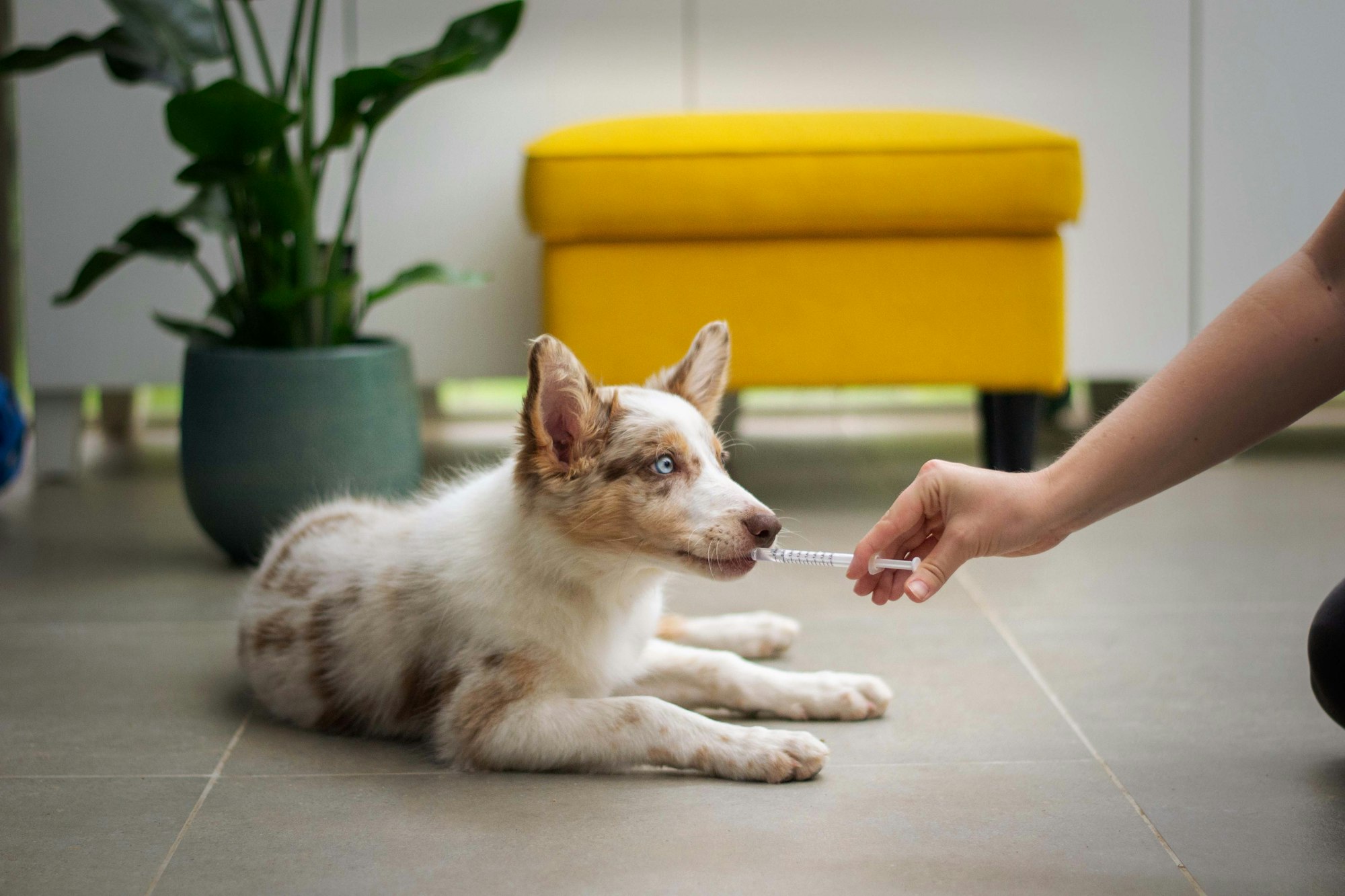
You fed your dog in a rush before work, the pill was still on the counter, and by noon you couldn’t remember whether you had given it.
In a New Zealand study of dog owners at Massey University’s veterinary teaching hospital, 47% didn’t give a prescribed medication exactly as directed (a wrong dose, wrong timing or an unfinished course), and 30% of those giving oral medication had missed at least one dose. A companion study of cat owners at the same practice found 39% and 21%. Irregular dosing means infections take longer to clear and chronic conditions get harder to control.
Why doses get missed
Dosing frequency matters. In a 2005 study of 90 dog owners giving short-term antibiotics, those dosing once or twice a day were about nine times more likely to give every dose than those dosing three times a day. If your pet’s schedule is three times a day, ask your vet about a once- or twice-daily option.
Extra pets, refill gaps, travel and a regimen that keeps changing all make it harder. One Notepet user caring for a dog with cancer wrote in a Play Store review: “He’s on so many meds different schedules, they need to be paused sometimes… It’s too much to remember.”
Types of pet medications
| Type | Examples | Main challenge |
|---|---|---|
| Short-term | Antibiotics, post-surgical pain relief | Finishing the full course |
| Chronic | Epilepsy, thyroid, heart disease | Consistent timing over months or years |
| Preventative | Flea/tick, heartworm | Low frequency, so easy to forget |
| As-needed | Anxiety, seasonal allergies | Having it on hand before you need it |
Give short-term medications for the full course your vet prescribed, even if your pet seems better. An infection that looks cleared may not be gone.
Never stop a chronic medication abruptly. Seizure drugs such as phenobarbital must be tapered slowly, because a sudden stop can bring on seizures.
Preventatives get forgotten because your pet shows no sign of needing them. In a 2025 survey of 4,072 pet owners in 15 countries, sponsored by Merck Animal Health, 46% of dog owners and 51% of cat owners said they had forgotten a flea and tick treatment in the past year.
For as-needed medications, know the lead time. Some anxiety medications need to be given an hour or two before the stressful event.
Building a routine
Anchor doses to meals. If your dog eats at 7am and 6pm, those are your twice-daily times.
Make reminders say exactly what to give: “Luna: Enalapril 5mg with food.”
Log every dose. The log answers “did I give it?” and gives your vet a timeline if your pet reacts to a new drug.
Set a refill reminder a week before each prescription runs out. For more, see How to Set Up Pet Medication Reminders That Work.
More than one pet
Some products that are safe for dogs are harmful to cats. The ASPCA warns that permethrin, common in dog flea products, can cause severe tremors and seizures in cats. Store each pet’s medications separately and keep a log for each. See Managing Medications for Multiple Pets.
Before a vet appointment
Pull up your log since the last visit, note missed doses and any reactions to a new medication, and ask about prescriptions due for renewal. See How to Prepare for a Vet Appointment: What to Bring and What to Track.
If you miss a dose, or can’t remember
When a medication is prescribed, ask your vet what to do about a missed dose, especially for insulin or seizure drugs. The usual guidance is to give a missed dose if you remember within a few hours. If the next dose is close, skip the missed one and carry on with the schedule. Never give a double dose.
If you can’t remember whether you gave it, check your log before giving anything. With no record, call your vet rather than risk a double dose.
If doses keep slipping, tell your vet. A different formulation or schedule may be easier to give.
How Notepet helps
When a dose is due, Notepet sends a notification and you mark it Given or Skipped. If you give it late, you can record the time you actually gave it. You can pause a schedule when your vet holds a course, track stock to see roughly how many doses are left, and share pets with family through Groups, where each dose shows who recorded it. See Managing medications with Notepet.
Next time you’re not sure whether you gave that pill, Notepet tells you in one tap. It’s free to start at notepet.io.
Step-by-step help in the Notepet app: Medications guide, Medications & Reminders FAQs.